
When Fog Meets Wind: How Wind Fences Boost Dry Fog Dust Control
Imagine you are on an early morning walk in the early autumn. Your view is a bucolic scene right out of a Jean-Francois Millet painting. A veil of fog as thick as pea soup hovers over the countryside. It is so dense that you can’t see through it.
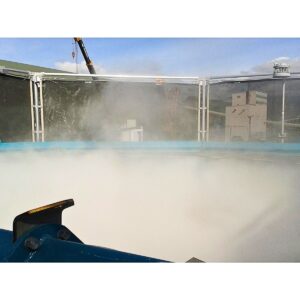
Although not quite as picturesque, this natural fog is similar to what you might see with a dry fogging system used for industrial dust control. Dry fogging systems are a dust suppression method that disperse a cloud of atomized water droplets (fog) that bind to and suppress airborne dust.

The tiny water droplets in the fogging system interact with the dust particles in order to agglomerate. Agglomerate is just a fancy word to describe particles sticking together and forming a larger, heavier “cluster” or “clump”. In order for this process to occur, there are two key requirements:
- The atomized water from the fogging system needs to be roughly the same size as the dust particles. If the water droplets are too large the surface tension on the water droplet will repel the dust and it will just pass by in the airstream around the droplet instead of binding to it.
- The fog needs to have sufficient “hang-time” for agglomeration to take place.
If these requirements are met, the newly formed clump will simply fall back down under its own weight. Sounds easy peasy right? Not so fast…there’s a catch.
Recall the blanket of natural fog we saw on our imaginary rural walk? If wind blows across the landscape, the fog will surely follow along for the ride.
The same goes for dry fogging systems in dust mitigation. Unfortunately, this has negative impacts on the effectiveness of the fogging system. If the fog that is supposed to be suppressing the dust is blowing away, then it won’t be very effective at dust control. This is where a wind fence enclosure can help.
How a Wind Fence Makes Things Better
By enclosing the area around a fogging system with a wind fence, the wind speeds within the enclosure are drastically reduced preventing both the fog and dust from dispersing in the wind. Typically, the wind speed is decreased by around 80% or so over localized areas. To learn more about how wind fences work visit www.weathersolve.com.
In fact, wind fences have been shown to improve the effectiveness of dry fog control systems especially in areas where ROM bins (dump hoppers) are used1. Think “increased hang-time”.
WeatherSolve has extensive experience implementing wind fence solutions to optimize fogging systems on industrial sites and hoppers. Our fences help boost fogging system performance leading to better air quality, improved visibility, and optimized dust control.
A wind fence truly does make things better.
References & Reading Materials
- “Using Agglomerative Dust Suppression and Wind Breaks for Fugitive Dust Abatement” Australasian Mine Safety Journal April 17, 2019 https://www.amsj.com.au/using-dry-fog-dust-suppression-and-wind-breaks-to-control-dust/ Accessed Sept 26, 2024

Claire Cowie is a seasoned Quality Assurance Manager with over two decades of experience in healthcare and manufacturing. Her career began in pharmacy, where she led teams and honed her skills in quality management systems. As she transitioned to the manufacturing sector, her unique background combines a deep understanding of policy and quality assurance with a keen eye for quality control.
Claire has been instrumental in implementing and cultivating a comprehensive quality control program within WeatherSolve Structures. She has successfully integrated her pharmaceutical background with manufacturing best practices, particularly in areas such as Good Manufacturing Practices (GMP) and ISO 9001 standards. Her unique blend of experience continues to drive innovation and excellence in her role.